
Tsunan Sake Brewery Introduces GO UONUMA SPARKLING, a Sparkling Sake Brewed From 100% Uonuma Koshihikari Table Rice
TSTsunan Sake Brewery10 min read

GO UONUMA SPARKLING, a sparkling sake made from 100% Uonuma Koshihikari

Rice ripening in a paddy

Steamed rice being spread by hand during sake brewing
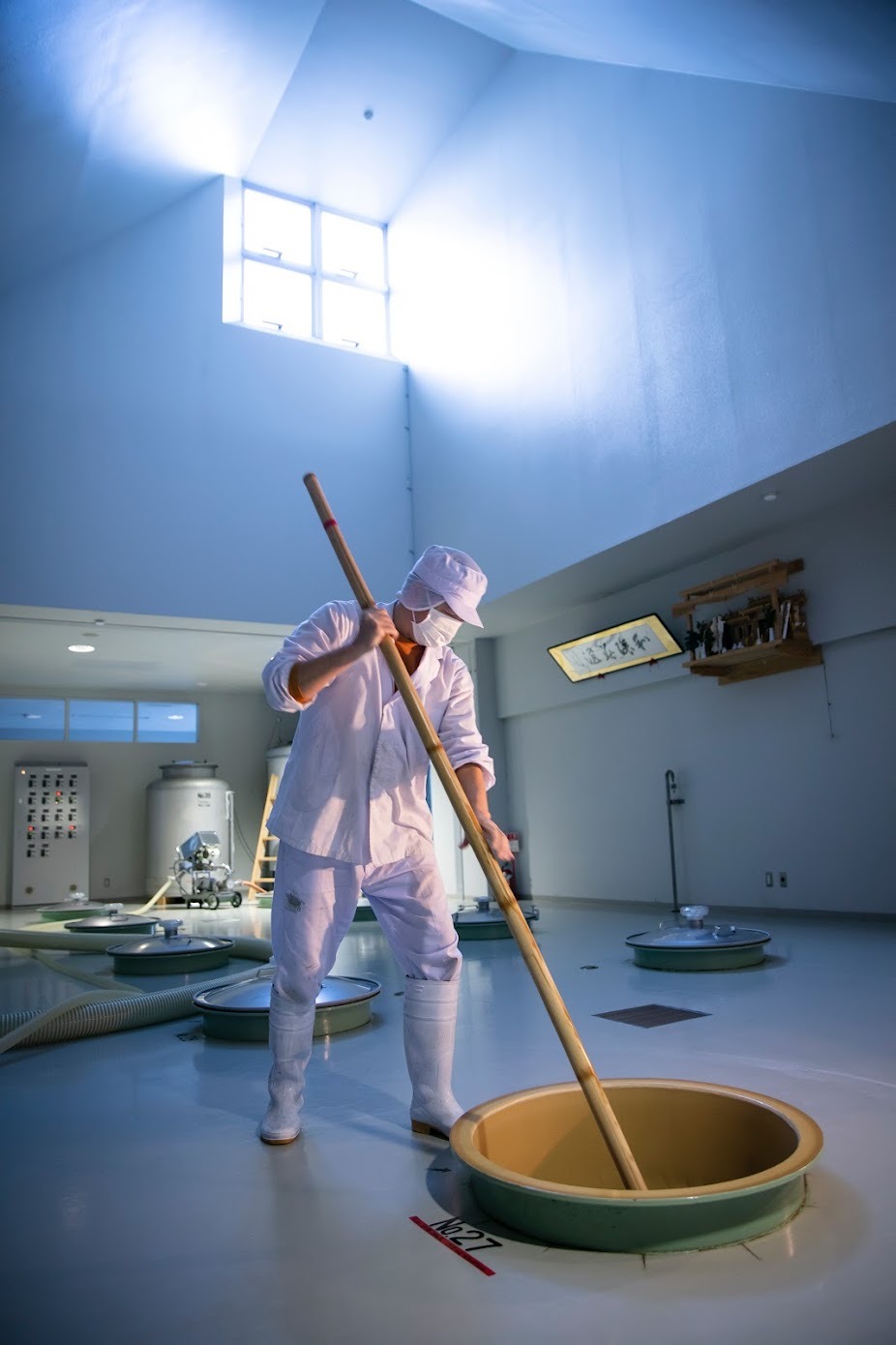
A brewer at work

Tsunan Sake Brewery surrounded by snow in winter
Brewed from 100% Uonuma Koshihikari at a 90% polishing ratio, this 8% sparkling sake in a 270 ml aluminum bottle is now on sale in Niigata.
We wanted to brew sake from Koshihikari grown for eating, using rice milled by farmers without polishing it further.”
— Kengo Suzuki, President and Representative Director, Tsunan Sake Brewery
TSUNAN, NIIGATA, JAPAN, November 18, 2026 /EINPresswire.com/ -- Tsunan Sake Brewery, based in Tsunan, Niigata Prefecture, has released GO UONUMA SPARKLING, a sparkling sake brewed from 100% Koshihikari table rice grown in the Uonuma area. Koshihikari is a well-known Japanese rice variety grown for eating. Instead of sake-brewing rice, the brewery uses Koshihikari that farmers have already milled into white rice for the table, and brews it without additional polishing. The polishing ratio is 90%, the alcohol content is 8%, and the sake comes in a 270 ml aluminum bottle.
GO UONUMA SPARKLING is now on sale in Niigata Prefecture, and a nationwide launch in Japan is planned for spring 2027 or later. The brewery has brewed sake from Uonuma Koshihikari since 2023 with technical support from FERMENT8.
Rice is an everyday staple in South Korea and Vietnam, as it is in Japan. The brewery hopes to introduce sake made from table rice to readers in both countries, and it welcomes inquiries from importers, distributors and restaurants outside Japan. Availability in South Korea and Vietnam has not been confirmed.
What GO UONUMA SPARKLING is
– Category: sake (sparkling)
– Ingredients: rice (Uonuma, Niigata) and rice koji made from Uonuma rice, with carbon dioxide
– Rice: 100% Uonuma Koshihikari
– Polishing ratio: 90%
– Alcohol: 8%
– Volume: 270 ml aluminum bottle
– Release: September 25, 2026, in Niigata Prefecture first
– Producer: Tsunan Sake Brewery
The brewery describes a gentle rice flavor, clean acidity and light carbonation. It developed the sake to be enjoyed with meals, without emphasizing sweetness alone. The listed ingredients include carbon dioxide. The brewery recommends drinking it well chilled, either from a glass or straight from the bottle.
Rice for eating, rice for sake
Sake is widely made from sake-brewing rice varieties such as Yamada Nishiki and Gohyakumangoku. These varieties have large grains, and many have a white, opaque core called shinpaku, where the starch is loosely packed. Koji mold grows easily into this core. Sake-brewing rice also generally contains less protein than table rice.
Koshihikari is different. It was bred for eating. It lacks a distinct shinpaku and generally contains more protein than sake-brewing rice. For these reasons, brewing good sake from table rice has generally been considered more difficult. Tsunan Sake Brewery started from a simple question: what happens if rice that is good to eat is made directly into sake?
Why the polishing ratio is 90%
The polishing ratio is the weight of polished rice as a percentage of the original brown rice. If 100 kilograms of brown rice are polished to 90%, about 90 kilograms remain; at 50%, about 50 kilograms remain. For daiginjo sake, the ratio must be 50% or lower. Proteins and fats are concentrated toward the outer layers of the grain and influence the flavor of the finished sake.
GO UONUMA SPARKLING is made at 90%, close to ordinary white rice for the table. The brewery starts with white rice milled by farmers and does not polish it further for sake. According to Atsushi Kabasawa, CEO of FARM8 and a co-founder of FERMENT8, rice at this ratio can be milled with ordinary rice-polishing machines used for table rice, not only with dedicated sake-rice equipment.
Keeping more of the outer layers makes brewing harder. Sake is made by multiple parallel fermentation: in the same tank, enzymes from koji break down rice starch into sugars while yeast converts those sugars into alcohol. The brewers have to balance the two so that the character of the rice comes through as flavor rather than as roughness.
In a September 2026 article, Kabasawa wrote that Koshihikari is stickier than sake rice, so steamed grains tend to clump and harden quickly, which makes koji harder to grow. The team adjusted soaking, steaming and koji making to suit the rice. For the 90% trials, Kabasawa described using lower starting temperatures and watching the mash temperature closely during the later stage of fermentation.
Building on Koshihikari brewing since 2023
FERMENT8, a company that works on brewing with table rice, provides technical support for the brewery's work with Koshihikari. The brewery's GO GRANDCLASS Uonuma Koshihikari Edition, a junmai daiginjo made from the same rice variety polished to 50%, won a Gold award in the Junmai Daiginjo category at KURA MASTER 2024 and a Platinum award at the Milano Sake Challenge 2025.
Kabasawa's articles describe how the work moved step by step. The first batch, in 2023, was a junmai daiginjo polished to 50%, made from Uonuma Koshihikari grown by a farmer in Tsunan who already supplied rice to the brewery. The team then tried brewing with unpolished brown rice, and then with rice polished to 90%, close to everyday white rice. Kabasawa uses the term "hanmai jozo," or table rice brewing, for sake brewed from table rice polished to around 90%, close to the condition in which it is eaten.
GO UONUMA SPARKLING uses the same rice variety at a 90% polishing ratio. The brewery chose a portable 270 ml aluminum bottle to appeal to regular sake drinkers and visitors to Niigata alike.
Tsunan Sake Brewery uses the term Premium Table Rice Sake for premium sake brewed from rice grown for eating. Niigata is one of Japan's leading rice-growing prefectures, with extensive production of rice grown for eating. Kabasawa, citing figures from Japan's Ministry of Agriculture, Forestry and Fisheries, wrote that private rice inventories at the end of July 2026 were 1.62 million tonnes on a brown-rice basis, up 700,000 tonnes from a year earlier. He also recalled that in 2020, when the pandemic cut sake sales, sake-brewing rice was left over and had no large food market to absorb it. He proposes using the same rice varieties for both food and sake production.
By brewing sake from table rice, the brewery aims to open another market for local farmers and to give visitors a new way to enjoy Koshihikari: not only to eat it, but also to drink it.
The brewery explains Premium Table Rice Sake in 12 languages, including Korean and Vietnamese, on tablericesake.com.
First reactions
On October 10 and 11, 2026, brewery staff offered tastings of GO UONUMA SPARKLING at the "Niigata Sake League Festa," held at the Ponshukan shop at Niigata Station. According to the brewery, many people who tried it said it was delicious. When staff explained that it was made from Koshihikari at a 90% polishing ratio, many visitors were surprised that sake could be made from the rice they eat every day.
From November 11 to 13, 2026, the brewery exhibited at Food Messe in Niigata 2026, a food trade show at Toki Messe in Niigata City, where it presented GO UONUMA SPARKLING alongside its 180 ml GO PIN bottles and other sparkling sake.
On September 27, 2026, Niigata Keizai Shimbun, an online business news site in Niigata, reported on the launch.
Where to find it
The brewery announced a phased rollout at its own shop in Tsunan and at tourism and souvenir outlets in Niigata Prefecture, including Ponshukan shops and Pia Bandai, a food market with shops and restaurants in Niigata City. Availability and sales start dates vary by location. A nationwide launch in Japan is planned for spring 2027 or later.
For buyers outside Japan, the brewery welcomes inquiries about GO UONUMA SPARKLING and its other sakes through the contact details in this release.
From snow country
Tsunan is a town in the mountains of southern Niigata Prefecture, near the border with Nagano Prefecture, and one of the snowiest areas in Japan. Snow usually lies about three meters deep in winter and can reach about four meters in some years. In spring, the snow melts into water that flows into the rice paddies.
The brewery uses soft natural water from the surrounding mountains, which rise to about 2,000 meters, and the winter cold supports slow fermentation. The town's landscape of river terraces is part of the Naeba-sanroku Geopark, a Japanese Geopark.
Brewing with data and generative AI
The brewery supports the judgment of its toji (master brewer) with data and generative AI, an approach it calls Smart Brewing. At the 31st Niigata Prefecture sake brewing technology conference in 2026, it presented an in-house app that uses its own records to help estimate rice-soaking times. The brewery is also reviewing past brewing records using knowledge of microbial metabolism, to better understand its results and make brewing with table rice more reliable.
Visiting the brewery
Visitors can generally join a brewery tour without a booking during opening hours, from 9:00 to 16:00. Booking ahead through the Japanese-language reservation calendar on the brewery's website is the surest way to secure a place. A tour takes about 30 to 35 minutes. Visitors watch production through a viewing window on the second floor and taste three standard Tsunan sakes free of charge, with a paid tasting option that includes GO GRANDCLASS. The tour ends at the brewery's shop. Tasting is not offered to anyone under 20 or to anyone who will drive.
The Joetsu Shinkansen connects Tokyo with Echigo-Yuzawa Station, where travelers can take a bus to Tsunan.
A comment from the brewery's president
Kengo Suzuki, President and Representative Director, Tsunan Sake Brewery
"We wanted to brew sake from Koshihikari grown for eating, using rice milled by farmers without polishing it further. GO UONUMA SPARKLING has a gentle rice flavor, clean acidity and light carbonation. Rice is part of everyday meals in South Korea and Vietnam too, and I hope people there will be interested in sake made from table rice. We welcome inquiries from potential partners in those markets."
Learn more
– GO UONUMA SPARKLING: https://koshihikari.tsunan-sake.com/sparkling/
– Tsunan Sake Brewery: https://tsunan-sake.com/
– Premium Table Rice Sake, in 12 languages: https://tablericesake.com/
– Premium Table Rice Sake in Korean: https://tablericesake.com/ko/
– Premium Table Rice Sake in Vietnamese: https://tablericesake.com/vi/
– GO GRANDCLASS Uonuma Koshihikari Edition: https://koshihikari.tsunan-sake.com/en/
– Launch announcement (Japanese, PR TIMES): https://prtimes.jp/main/html/rd/p/000000176.000054865.html
– Tasting report from Niigata Station (Japanese, PR TIMES): https://prtimes.jp/main/html/rd/p/000000187.000054865.html
– Niigata Keizai Shimbun article (Japanese): https://www.niikei.jp/2080513/
– Brewing sake from table rice, part 1 (Japanese, FARM8 on note): https://note.com/farm8/n/n2e6e2230995f
– Brewing sake from Koshihikari, part 3 (Japanese, FARM8 on note): https://note.com/farm8/n/n9a98666910dd
– National Research Institute of Brewing, on rice polishing: https://www.nrib.go.jp/English/sake/esakefaq03.html
– Pia Bandai (Japanese, Niigata Prefectural Tourist Association): https://niigata-kankou.or.jp/spot/detail_10111.html
– Brewery tours and reservations: https://tsunan-sake.com/experience/
– Premium Table Rice Sake website launch announcement: https://tsunan-sake.com/premium-table-rice-sake/
– GO TERRACE, Gold at the Tokyo Sake Challenge 2026: https://tsunan-sake.com/go-terracetokyo-sake-challenge-2026/
– Brewery video on YouTube: https://www.youtube.com/watch?v=xFCVc_Xv2lE
– Lunar Brewery on metatell: https://tsunanzyouzou.metatell.app/EkG5aXM/
– Tsunan Tourism Association (Japanese): https://tsunan.info/
– Niigata Prefecture travel guide: https://enjoyniigata.com/en/
Questions and answers
What is GO UONUMA SPARKLING made from?
100% Uonuma Koshihikari, a rice grown for eating, and rice koji made from Uonuma rice, with carbon dioxide.
Why is the polishing ratio 90%?
The brewery uses white rice milled by farmers and does not polish it further for sake.
How strong is it?
The alcohol content is 8%.
Where is it sold?
The brewery began a Niigata-first launch on September 25, 2026, with a phased rollout at its own shop and tourism and souvenir outlets, including Ponshukan shops and Pia Bandai. Availability and sales start dates vary by location. A nationwide launch in Japan is planned for spring 2027 or later.
Is it available outside Japan?
The brewery welcomes inquiries from importers, distributors and restaurants outside Japan. Availability in South Korea and Vietnam has not been confirmed.
How should it be served?
Well chilled, in a glass or straight from the bottle.
About Tsunan Sake Brewery
Tsunan Sake Brewery is a sake brewery in Tsunan, Nakauonuma District, Niigata Prefecture, one of the snowiest areas in Japan. Under its brand concept "Brew for Future," it makes traditional sake from locally grown Gohyakumangoku sake rice and Premium Table Rice Sake from locally grown Uonuma Koshihikari. Its brands include the heritage label "Kiri no To," the locally rooted "Tsunan," and the premium "GO" series. In 2025, the brewery received the Niigata Governor's Award (first place) at the Echigo-style Sake Brewing Technical Competition.
KENGO SUZUKI
Tsunan Sake Brewery
+81 80-5063-8705
tsunan.world@gmail.com
Legal Disclaimer:
EIN Presswire provides this news content "as is" without warranty of any kind. We do not accept any responsibility or liability for the accuracy, content, images, videos, licenses, completeness, legality, or reliability of the information contained in this article. If you have any complaints or copyright issues related to this article, kindly contact the author above.
